Dhaka: Honorable sir, it is necessary to recall an important historical truth. In 1971, Pakistan’s Eastern Command surrendered only on the eastern front; Pakistani forces were not fully defeated on the western front at that time. The rapid and effective “lightning campaign” in East Bengal was made possible primarily because of the active participation of Bangladeshi freedom fighters and military officers.
Had the people of Bangladesh, the freedom fighters, and the rebel soldiers not stood alongside the effort, what might have happened is clearly illustrated by the 1965 Indo-Pak war. In that war, East Pakistan was virtually undefended, and India was unable to achieve any decisive success in the eastern theater.
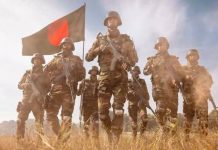
It is also part of history that, during their time in the Pakistan Army, Bengali soldiers were not given the opportunity to form sufficient or separate regiments. Through discrimination and neglect, Bengali soldiers nonetheless proved their competence—an achievement that found its ultimate expression in the Liberation War of 1971.
It was because Bangladeshi freedom fighters fought shoulder to shoulder with the Indian forces under the leadership of General Jagjit Singh Aurora that this historic victory became possible. This joint struggle created history—not the efforts of any single force alone.
We pay deep respect to the members of the Indian Armed Forces who were martyred in that war. At the same time, gratitude is due for having commanders like General Sam Manekshaw, a visionary and pragmatic military leader. However, acknowledging the full truth of history is what should form the foundation of mutual respect and healthy relations.

History does not belittle anyone—history only presents the truth. .Victory Day is ours, but this victory has gradually been hijacked by the Modi government and the Indian state narrative.
This hijacking did not happen overnight. Behind it lie some grave historical mistakes and acts of submission that began as early as 1971.
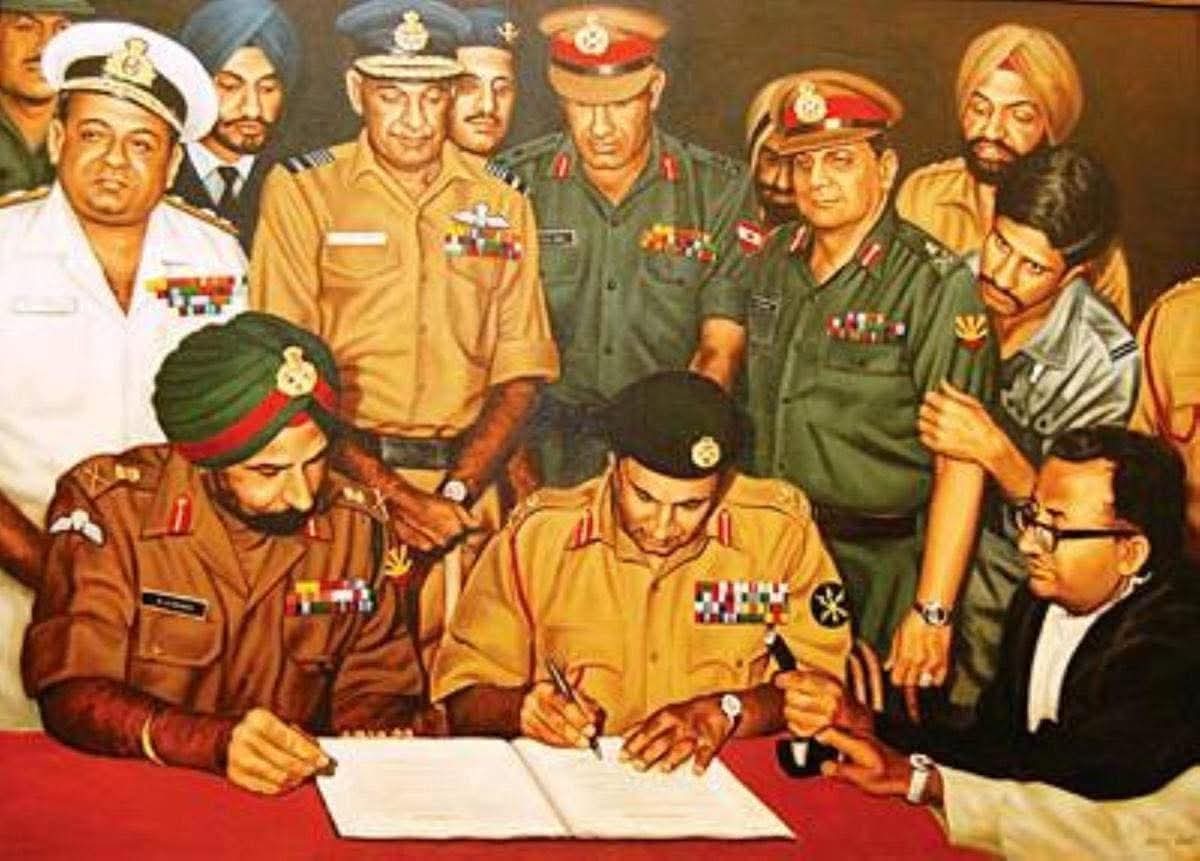
Not allowing General M. A. G. Osmani, the Commander-in-Chief of the Liberation War, to be present at the Pakistani army’s surrender ceremony, and not giving any Bangladeshi military representative the opportunity to sign the instrument of surrender—these incidents were direct assaults on Bangladesh’s sovereign dignity. Through this, the door was opened not merely to sharing credit for victory, but to gradually claiming the victory as their own.
This opportunity was created by a submissive and reckless group who served Indian interests for their own political gain. Some leaders of the so-called Mujib Bahini and Indian agents tried to obscure the true mainstream of the Liberation War—where ordinary people, farmers, workers, students, and freedom fighters sacrificed their lives—and instead establish an India-centric narrative.Shabera Shormin Haque. Politician, political analyst, entrepreneur, environmental expert, social worker, cultural activist, columnist. Chairman, The Bangladesh Views, Chief Adviser, 36TV
But the fundamental truth is— The Liberation War was solely the war of the Bangladeshi people.
This victory belongs exclusively to Bangladesh.
India did provide assistance—there is no need to deny that. But a helper and a victor are not the same. In history, many countries have assisted in many wars, but ownership of victory never belongs to the helper.
One crucial question remains— If India was so militarily capable, then why could it not defeat Pakistan in 1965 or in any earlier war?
Why, except for 1971, could it not decisively defeat Pakistan in any other conflict?
The answer lies in reality—in 1971, Pakistan was defeated by the internal mass uprising of the Bangladeshi people, nine months of armed liberation war, and immense sacrifice. India joined at the final stage after realizing one reality—that Pakistan’s defeat was inevitable.
Today, unfortunately, it appears that India’s so-called “victories” are largely manufactured through Bollywood films, exaggerated media narratives, and state propaganda
Instead of real battlefield history, there is an attempt to cover up real history with reels and fiction.
That is why it must be said again and again—
Victory Day is not a gift from anyone.
This victory must not be allowed to be hijacked again.
The history of the Liberation War must be written and told from Bangladesh’s own perspective.